
Most national networks run on infrastructure someone else owns and operates. When a shared provider decides who gets capacity, reroutes traffic, or changes terms, the nation depending on it is left with no say. Standing up an alternative means new contracts, new terminals in the field, and months of revalidation, none of which a crisis allows. Whoever holds this discretion holds the network at the exact moment the nation depends on it most.
Astranis MicroGEO satellites turn sovereignty from a claim written in a contract to control built into our architecture: dedicated capacity, in-country routing, and operational authority that no other tenant can erode.


.png)


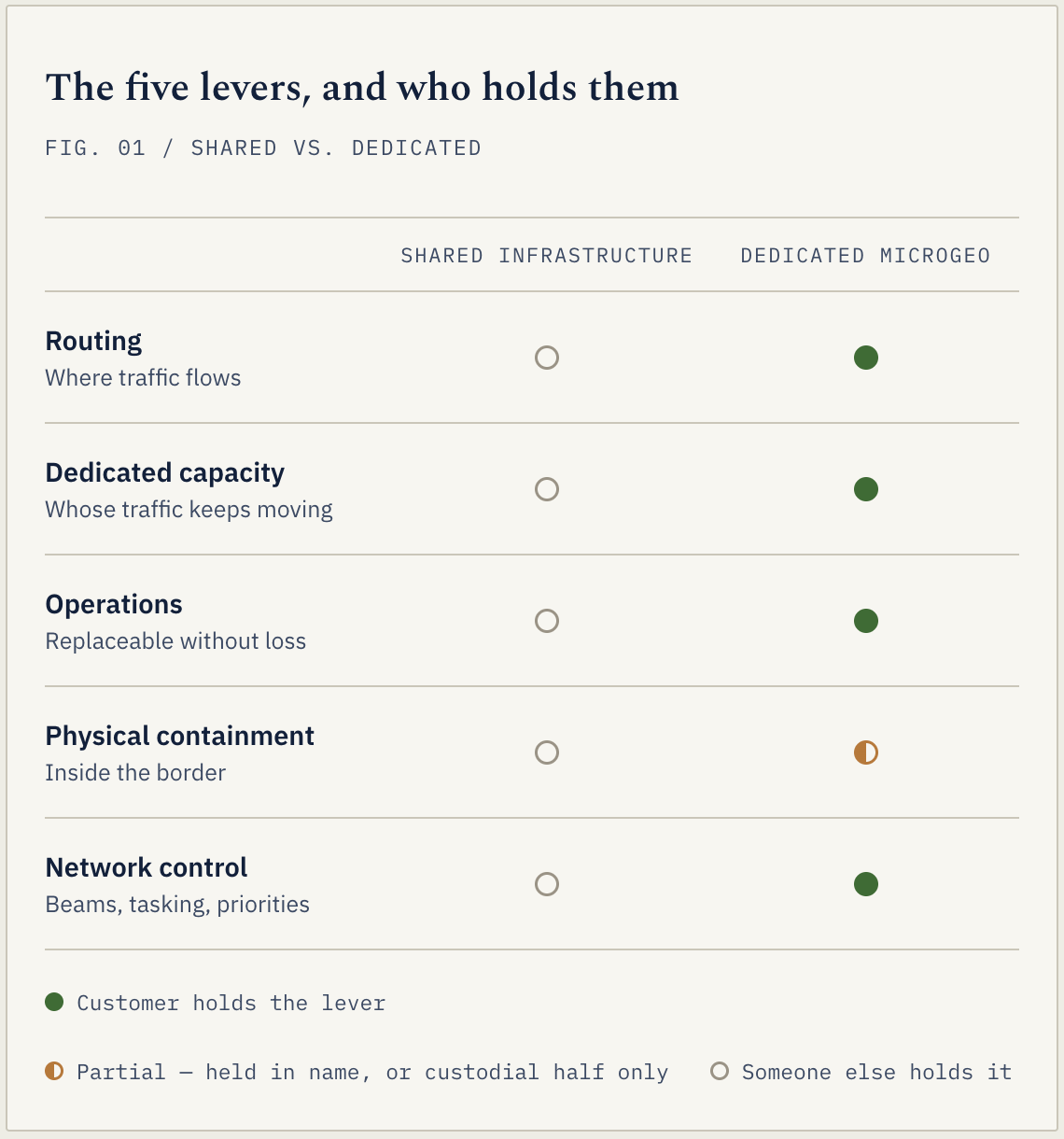
While national systems often rely on foreign contractors for early operations, a dedicated single-tenant network provides true, end-to-end operational sovereignty.
Astranis holds the custodial half: it keeps the satellite healthy, on station, and safe. The customer holds the operational half: the routing, the priorities, the keys, and the mission.
Shared infrastructure risks congestion, where your traffic competes with other users during surges. A dedicated network eliminates this contention, capacity is committed solely to you.